



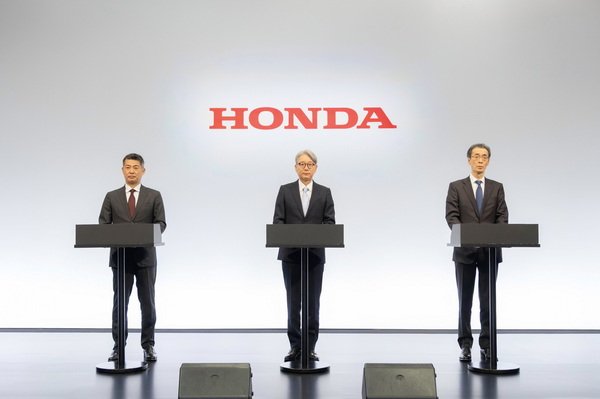
ฮอนด้า มอเตอร์ ประเทศญี่ปุ่น ประกาศแนวทางใหม่ในการดำเนินงานของฮอนด้า พร้อมปรับโครงสร้างธุรกิจยานยนต์และทิศทางธุรกิจของฮอนด้าในอนาคต ครอบคลุมทั้งการปรับโครงสร้างธุรกิจรถยนต์ รถจักรยานยนต์ และการบริการทางการเงิน มีมูลค่ามากกว่า 1.4 ล้านล้านเยน ภายในปี 2572
– การปรับโครงสร้างธุรกิจยานยนต์ใหม่และการสร้างการเติบโตอย่างยั่งยืนในระยะกลางถึงระยะยาว
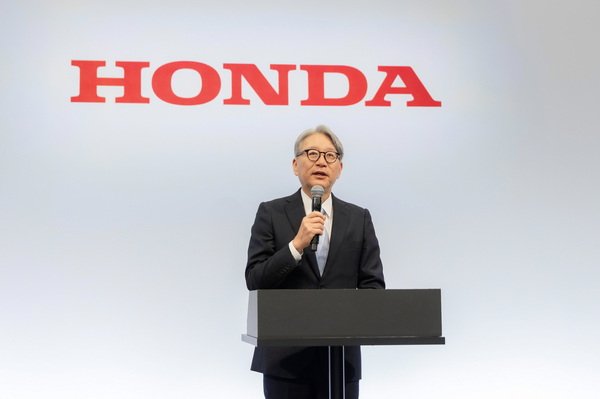
นายโทชิฮิโระ มิเบะ ผู้อำนวยการ ประธานกรรมการบริหาร และตัวแทนเจ้าหน้าที่บริหาร (Global CEO) บริษัท ฮอนด้า มอเตอร์ จำกัด จัดงานแถลงข่าวเพื่อนำเสนอแนวทางการดำเนินงานของฮอนด้า ในการปรับโครงสร้างธุรกิจยานยนต์และทิศทางธุรกิจของฮอนด้าในอนาคต โดยมีข้อสรุปประเด็นสำคัญ 5 ประเด็นหลัก ดังนี้:
1.แนวทางการปรับโครงสร้างธุรกิจยานยนต์
ท่ามกลางการเปลี่ยนแปลงอย่างรวดเร็วของสภาพแวดล้อมทางธุรกิจในปัจจุบัน ฮอนด้า มุ่งยกระดับขีด
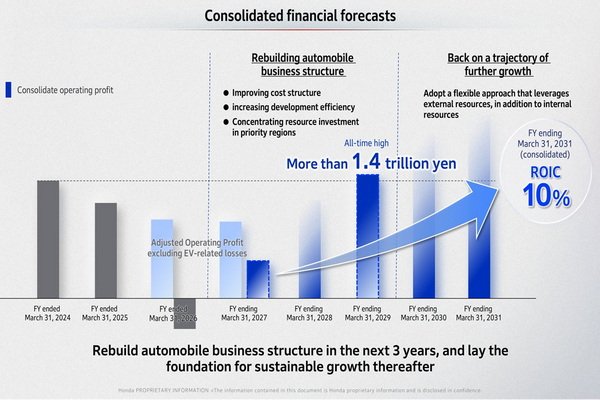
ความสามารถในการแข่งขันในหลากหลายด้าน ทั้งการปรับโครงสร้างต้นทุน การเพิ่มประสิทธิภาพในกระบวนการพัฒนา ตลอดจนการเสริมความแข็งแกร่งของไลน์อัปผลิตภัณฑ์ โดยมุ่งเน้นการจัดสรรทรัพยากรองค์กรไปยังภูมิภาคที่เป็นตลาดสำคัญ เพื่อให้บรรลุเป้าหมายดังกล่าว ฮอนด้า จะให้ความสำคัญการปรับโครงสร้างธุรกิจยานยนต์ในช่วง 3 ปีข้างหน้า พร้อมตั้งเป้าสร้างกำไรจากการดำเนินงานรวม ซึ่งครอบคลุมทั้งธุรกิจรถจักรยานยนต์และบริการทางการเงิน มูลค่ามากกว่า 1.4 ล้านล้านเยน ซึ่งจะเป็นสถิติสูงสุดใหม่ ภายในปีงบประมาณสิ้นสุดวันที่ 31 มีนาคม 2572
2.แนวทางหลัก 3 ด้าน ในการดำเนินงานเพื่อปรับโครงสร้างธุรกิจยานยนต์
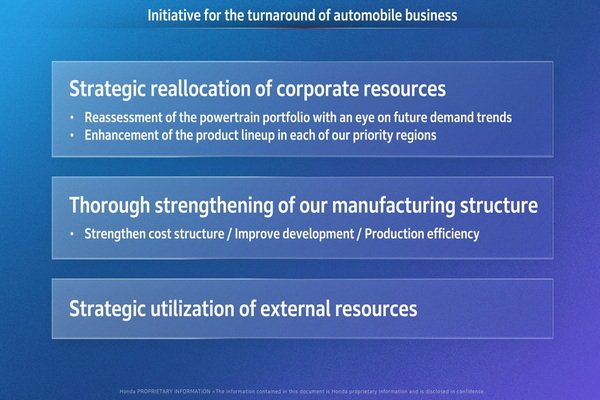
ฮอนด้า ได้กำหนด 3 แนวทางหลักสำหรับการดำเนินงาน ได้แก่
การจัดสรรทรัพยากรองค์กรเชิงกลยุทธ์
การยกระดับความแข็งแกร่งด้านการผลิตอย่างรอบด้าน
การใช้ทรัพยากรภายนอกอย่างมีกลยุทธ์
2-1. การจัดสรรทรัพยากรองค์กรเชิงกลยุทธ์
* การทบทวนพอร์ตโฟลิโอระบบขับเคลื่อน เพื่อตอบรับแนวโน้มความต้องการในอนาคต
ฮอนด้า จะปรับการจัดสรรทรัพยากรทั้งด้านการพัฒนาและการผลิตไปที่รถยนต์ไฮบริด ซึ่งกำลังเป็นที่ต้องการอย่างสูงในตลาดปัจจุบัน
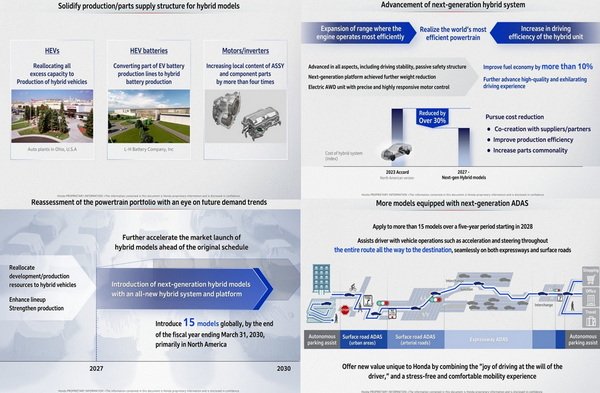
ตั้งแต่ปี 2027 (พ.ศ. 2570) เป็นต้นไป ฮอนด้า จะเริ่มเปิดตัวรถยนต์ไฮบริดเจเนอเรชันใหม่ ที่มาพร้อมระบบไฮบริดและแพลตฟอร์มใหม่ทั้งหมด โดยมีแผนเปิดตัวรถยนต์ไฮบริดเจเนอเรชันใหม่รวม 15 รุ่นทั่วโลก ภายในปีงบประมาณสิ้นสุดวันที่ 31 มีนาคม 2030 (พ.ศ. 2573) โดยมุ่งเน้นทำตลาดในอเมริกาเหนือ ซึ่งเป็นหนึ่งในตลาดหลัก ทั้งนี้ ในปี 2029 (พ.ศ. 2572) ฮอนด้า มีแผนเปิดตัวรถยนต์ไฮบริดขนาดใหญ่ในกลุ่ม D-Segment ขึ้นไปอีกด้วย
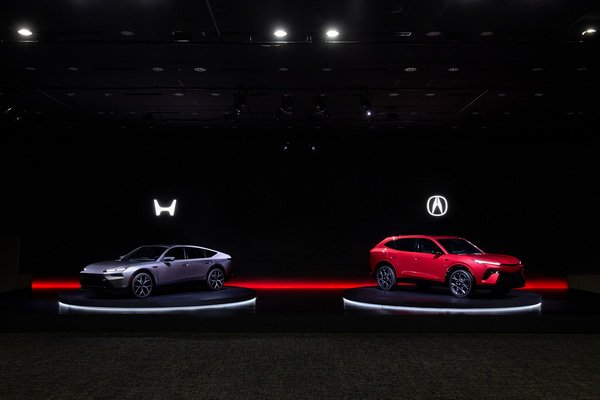
พร้อมเผยโฉมรถ Prototype ของรถยนต์ไฮบริดเจเนอเรชันใหม่ 2 รุ่น ได้แก่ Honda Hybrid Sedan Prototype และ Acura Hybrid SUV Prototype ที่มีแผนจะเปิดจำหน่ายภายใน 2 ปีข้างหน้า
ฮอนด้า จะทำการปรับลดต้นทุนของระบบไฮบริดเจเนอเรชันใหม่ให้ลดลงมากกว่า 30% เมื่อเทียบกับระบบไฮบริดที่เปิดตัวในปี 2023 โดยการผสานประสิทธิภาพของระบบไฮบริดเจเนอเรชันใหม่ แพลตฟอร์มเจเนอเรชันใหม่ และระบบขับเคลื่อน AWD แบบไฟฟ้าที่พัฒนาขึ้นใหม่เข้าด้วยกัน พร้อมตั้งเป้าเพิ่มอัตราการประหยัดน้ำมันของรถยนต์ไฮบริดเจเนอเรชันใหม่ให้ดีขึ้นกว่า 10% จากเดิม พร้อมมอบประสบการณ์การขับขี่ที่เหนือระดับและเร้าใจ อันเป็นเอกลักษณ์เฉพาะของฮอนด้าที่ตอบสนองความรู้สึกของผู้ขับขี่ได้ดั่งใจ
ด้านการพัฒนาระบบช่วยเหลือผู้ขับขี่ขั้นสูง (ADAS) เจเนอเรชันใหม่ ฮอนด้ากำลังอยู่ในขั้นตอนการพัฒนา โดยมีแผนเปิดตัวสู่ตลาดในปี 2028 (พ.ศ. 2571) และจะทำการติดตั้งระบบดังกล่าวในรถยนต์มากกว่า 15 รุ่น ภายในระยะเวลา 5 ปี
ฮอนด้า จะจัดสรรกำลังการผลิตของโรงงานผลิตรถยนต์ในรัฐโอไฮโออย่างมีประสิทธิภาพสูงสุด โดยจะผลิตรถยนต์เครื่องยนต์สันดาปและไฮบริดเพิ่มขึ้น พร้อมปรับโรงงานผลิตรถยนต์ทุกแห่งในอเมริกาเหนือ ให้สามารถรองรับการผลิตรถยนต์ไฮบริดได้ทั้งหมด
สำหรับโรงงานแบตเตอรี่ร่วมทุนระหว่างฮอนด้า และ LG Energy Solution ภายใต้บริษัท L-H Battery Company จะปรับบางส่วนของสายการผลิตแบตเตอรี่รถยนต์ไฟฟ้า (EV Battery) ไปผลิตแบตเตอรี่สำหรับรถยนต์ไฮบริด นอกจากนี้ยังมีแผนเพิ่มสัดส่วนการใช้ชิ้นส่วนภายในประเทศสำหรับชุดประกอบ (ASSY) รวมถึงชิ้นส่วนของมอเตอร์และอินเวอร์เตอร์ให้มากกว่าระดับปัจจุบันถึง 4 เท่า เพื่อรองรับการขยายการผลิตรถยนต์ไฮบริด เพื่อช่วยลดความเสี่ยงจากปัญหาการขาดแคลนชิ้นส่วน และบรรเทาผลกระทบจากมาตรการภาษีนำเข้าของสหรัฐอเมริกา
* การเสริมความแข็งแกร่งของไลน์อัปผลิตภัณฑ์ในภูมิภาคหลัก
ฮอนด้า กำหนดให้อเมริกาเหนือ ญี่ปุ่น และอินเดีย เป็นตลาดสำคัญสำหรับการเติบโตในอนาคต และจะมุ่งเน้นการจัดสรรทรัพยากรไปยังตลาดเหล่านี้เป็นหลัก โดยนอกเหนือจากแผนงานในอเมริกาเหนือ ฮอนด้า จะเดินหน้าขับเคลื่อนยุทธศาสตร์ในญี่ปุ่น และอินเดีย รวมถึงจีน เพื่อเสริมสร้างขีดความสามารถในการแข่งขันอย่างรอบด้าน
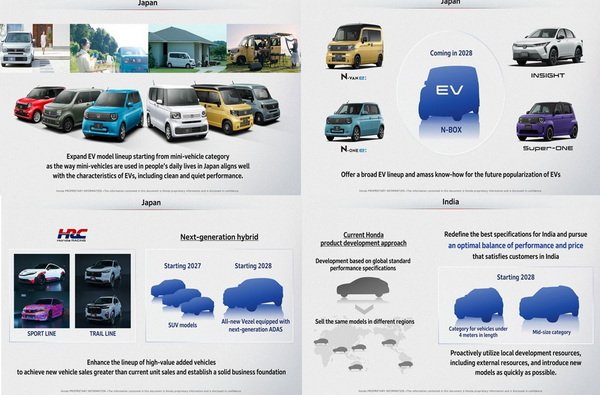
ญี่ปุ่น:
ฮอนด้า จะขยายไลน์อัปผลิตภัณฑ์รถยนต์ไฟฟ้า (EV) โดยเน้นไปที่กลุ่มรถยนต์ขนาดเล็ก หรือ Kei car เป็นหลัก ซึ่งรวมถึงการเปิดตัว N-BOX EV ในปี 2028 (พ.ศ. 2571) นอกจากนี้ ตั้งแต่ปี 2028 เป็นต้นไป ฮอนด้า จะทยอยเปิดตัวรถยนต์ไฮบริดเจเนอเรชันใหม่ที่มาพร้อมระบบ ADAS เจเนอเรชันใหม่ โดยเริ่มจาก All-new Vezel เป็นรุ่นแรก ขณะเดียวกันก็ยังมีแผนที่จะขยายไลน์อัปผลิตภัณฑ์เพื่อสร้างมูลค่าเพิ่ม ผ่านการนำเสนอรุ่นพิเศษอย่าง Sport Line และ Trail Line เพื่อผลักดันยอดจำหน่ายรถยนต์ใหม่ให้สูงกว่าในปัจจุบัน พร้อมทั้งสร้างรากฐานธุรกิจในประเทศญี่ปุ่นให้มีความแข็งแกร่งยิ่งขึ้น
อินเดีย:
ฮอนด้า จะกำหนดสเปกรถยนต์ที่สอดคล้องกับความต้องการของผู้บริโภคในตลาดอินเดีย โดยเตรียมเปิดตัวรถรุ่นใหม่ที่พัฒนาขึ้นเพื่อตลาดอินเดียโดยเฉพาะในปี 2028 ภายใต้ 2 กลุ่มผลิตภัณฑ์ ได้แก่ กลุ่มรถยนต์ความยาวไม่เกิน 4 เมตร และกลุ่มรถยนต์ขนาดกลาง นอกจากนี้ ฮอนด้าจะใช้ประโยชน์จากรากฐานที่แข็งแกร่งของธุรกิจรถจักรยานยนต์ในอินเดีย ซึ่งมียอดจำหน่ายสูงเกือบ 6 ล้านคันต่อปี เพื่อรองรับความต้องการของผู้บริโภคที่ต้องการเปลี่ยนจากการใช้รถจักรยานยนต์สู่รถยนต์ และผลักดันการเติบโตของธุรกิจในอินเดียอย่างต่อเนื่อง ทั้งนี้ ภายใต้กลยุทธ์ดังกล่าว ฮอนด้า ได้จัดตั้งบริษัท Honda Digital Innovation India เพื่อทำหน้าที่เป็นแพลตฟอร์มดิจิทัล รวมถึงเตรียมกระตุ้นยอดขายผ่านการให้บริการต่าง ๆ เช่น การให้บริษัทสินเชื่อภายในเครือแห่งใหม่ในอินเดีย ซึ่งมีกำหนดเริ่มดำเนินงานก่อนสิ้นปีงบประมาณที่สิ้นสุดวันที่ 31 มีนาคม 2027 (พ.ศ. 2570)
จีน:
ท่ามกลางสภาวะการดำเนินธุรกิจในประเทศจีนที่มีการเปลี่ยนแปลงอย่างรวดเร็ว ฮอนด้า มุ่งยกระดับขีดความสามารถในการแข่งขันด้านผลิตภัณฑ์และต้นทุน ผ่านการใช้ชิ้นส่วนมาตรฐานและเทคโนโลยีเจเนอเรชันใหม่จากภายซัพพลายเออร์ท้องถิ่น รวมถึงการเปิดตัวรถยนต์พลังงานใหม่ (NEV) ที่พัฒนาบนแพลตฟอร์มร่วมกับพันธมิตรในประเทศจีน
2-2. การยกระดับความแข็งแกร่งด้านการผลิตอย่างรอบด้าน
ฮอนด้า จะเดินหน้าขับเคลื่อนกลยุทธ์ใน 3 ด้านหลัก ได้แก่ การลดต้นทุนเชิงโครงสร้าง การยกระดับประสิทธิภาพด้านการพัฒนาอย่างรอบด้าน และการวางรากฐานโครงสร้างการผลิตที่มีความยืดหยุ่น ให้พร้อมรับมือต่อการเปลี่ยนแปลงของสภาพแวดล้อมทางธุรกิจ
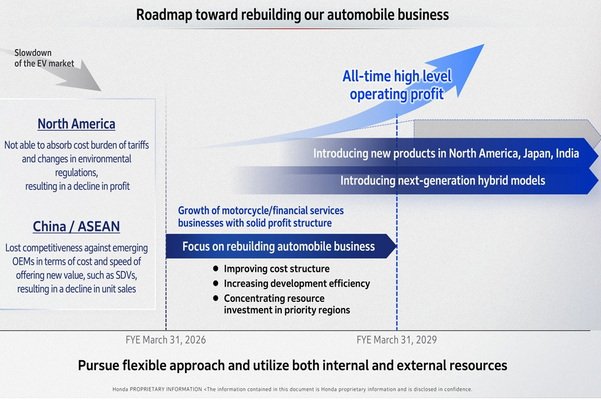
การลดต้นทุนเชิงโครงสร้าง:
สำหรับการบริหารจัดการต้นทุนชิ้นส่วนจากผู้ผลิตภายนอก ฮอนด้า จะปรับปรุงโครงสร้างต้นทุนทั่วโลก ผ่านการทบทวนมาตรฐานเฉพาะของฮอนด้า และหันมาใช้ชิ้นส่วนมาตรฐานให้มากขึ้น พร้อมทั้งนำข้อได้เปรียบทางการแข่งขันของผู้ประกอบการท้องถิ่นในประเทศจีนและอินเดียมาปรับใช้
* การยกระดับประสิทธิภาพด้านการพัฒนาอย่างรอบด้าน:
ฮอนด้า จะเดินหน้ายกระดับประสิทธิภาพการพัฒนาอย่างเป็นรูปธรรม ผ่านการทบทวนการบริหารจัดการห่วงโซ่งานด้านวิศวกรรม (engineering chain management) อย่างรอบด้าน ผ่านแนวคิด “Triple Half” มุ่งลด 3 ด้าน ได้แก่ 1. ต้นทุนการพัฒนา 2. ระยะเวลาการพัฒนา และ 3. ปริมาณภาระงานในการพัฒนา โดยจะลดลงครึ่งหนึ่งเมื่อเทียบกับปี 2025
นอกเหนือจากการเพิ่มประสิทธิภาพในขั้นตอนการออกแบบ การทดสอบ และการผลิตในช่วงต้น ผ่านการจำลองสภาพแวดล้อมดิจิทัลและเทคโนโลยี AI มาใช้ ฮอนด้า จะเดินหน้าปฏิรูปกระบวนการพัฒนาอย่างเต็มรูปแบบ ตั้งแต่การทบทวนข้อกำหนดทางเทคนิค การวางแผนผลิตภัณฑ์ ไปจนถึงการบริหารจัดการพัฒนาผลิตภัณฑ์ ด้วยแนวทางดังกล่าว จะช่วยให้ฮอนด้าสามารถลดระยะเวลาการพัฒนาสำหรับรถยนต์รุ่น Minor Change ลงครึ่งหนึ่ง โดยเริ่มตั้งแต่ปีงบประมาณนี้เป็นต้นไป ขณะที่รถยนต์รุ่น Full Model Change จะเริ่มลดระยะเวลาการพัฒนาลงครึ่งหนึ่งเช่นกัน โดยเริ่มจากโปรเจ็กต์ที่เข้าสู่กระบวนการพัฒนาในปี 2028 เป็นต้นไป
การวางรากฐานโครงสร้างการผลิตที่มีความยืดหยุ่น ให้พร้อมรับมือต่อการเปลี่ยนแปลงของสภาพแวดล้อมทางธุรกิจ:
ฮอนด้า ตั้งเป้าที่จะยกระดับประสิทธิภาพการผลิตขึ้นประมาณ 20% ภายใน 5 ปีข้างหน้า ผ่านการบริหารเงินลงทุนและการจัดสรรทรัพยากร สำหรับรถยนต์รุ่นใหม่และอุปกรณ์อย่างมีประสิทธิภาพ
2-3. การใช้ทรัพยากรภายนอกอย่างมีกลยุทธ์
ฮอนด้า มีแผนที่จะใช้ทรัพยากรจากภายนอกอย่างยืดหยุ่นและมีกลยุทธ์มากขึ้น รวมไปถึงการใช้ประโยชน์จากความสามารถในการแข่งขันด้านต้นทุน ความรวดเร็ว ตลอดจนการใช้ชิ้นส่วนที่ได้มาตรฐานอุตสาหกรรมของธุรกิจท้องถิ่นในจีนและอินเดีย สำหรับกลยุทธ์ด้านแบตเตอรี่ ในขณะนี้ ฮอนด้า จะยังไม่เน้นการผลิตเองทั้งหมด แต่จะใช้ศักยภาพจากโรงงานของ L-H Battery อย่างเต็มที่ เพื่อเตรียมพร้อมรับมือกับความต้องการรถยนต์ไฟฟ้าที่จะเติบโตในอนาคต ฮอนด้าจะเพิ่มประสิทธิภาพในการดำเนินงานด้วยการผลิตแบตเตอรี่สำหรับรถยนต์ไฮบริดซึ่งมีความต้องการสูงในปัจจุบัน รวมถึงการผลิตเพื่อใช้งานในรูปแบบอื่น ๆ นอกจากนี้ ฮอนด้า จะเดินหน้ากลยุทธ์การจัดซื้อแบตเตอรี่ โดยมุ่งเน้นไปที่การสร้างความสามารถในการแข่งขันในตลาดอเมริกาเหนือเป็นหลัก
ฮอนด้า ตัดสินใจระงับโครงการสร้างห่วงโซ่อุปทานรถยนต์ไฟฟ้าแบบครบวงจรในแคนาดาออกไปอย่างไม่มีกำหนด พร้อมทั้งทบทวนกลยุทธ์การจัดซื้ออย่างต่อเนื่อง นอกจากนี้ ฮอนด้า จะมุ่งเน้นการผสมผสานเทคโนโลยีหลักที่ฮอนด้าพัฒนาขึ้นเองเข้ากับทรัพยากรจากภายนอก เพื่อเพิ่มขีดความสามารถในการแข่งขันภายใต้สภาพแวดล้อมทางธุรกิจที่มีความไม่แน่นอน
2. ทิศทางในระยะกลางถึงระยะยาว
ฮอนด้า ยังคงมุ่งมั่นในการมุ่งสู่ความเป็นกลางทางคาร์บอน (Carbon Neutrality) ภายในปี 2050 ในฐานะผู้นำด้านการขับเคลื่อนแบบครบวงจร โดยจะดำเนินการประเมินสภาพแวดล้อมทางตลาด และแนวโน้มความต้องการแต่ละภูมิภาคอย่างรอบคอบ ควบคู่กับการเร่งผลักดันแนวทางหลากหลาย เพื่อบรรลุเป้าหมายความเป็นกลางทางคาร์บอน ครอบคลุมทั้งรถยนต์ไฟฟ้า รถยนต์ไฮบริด เชื้อเพลิงที่มีความเป็นกลางทางคาร์บอน และเทคโนโลยีการชดเชยคาร์บอน
ในส่วนของรถยนต์ไฟฟ้า (EV) ฮอนด้า จะยังคงเดินหน้าวางรากฐานสำหรับการเปิดตัวแพลตฟอร์มฮาร์ดแวร์ EV ที่มีขีดความสามารถในการแข่งขันสูงในอนาคต เพื่อให้มีความพร้อมในการรองรับความต้องการของตลาดเมื่อถึงเวลาที่เหมาะสม ควบคู่ไปกับการวิจัยและพัฒนาแบตเตอรี่ All-Solid-State นอกจากนี้ ฮอนด้า จะนำระบบปฏิบัติการ ASIMO OS มาใช้ ไม่เพียงเฉพาะกับรถยนต์ไฟฟ้าเท่านั้น แต่ยังขยายไปสู่รถยนต์ไฮบริดด้วย เพื่อยกระดับคุณค่าในการขับเคลื่อน เพื่อนำเสนอประสบการณ์ใหม่ในการเดินทางและภายในห้องโดยสาร ผ่านการประยุกต์ใช้เทคโนโลยีอัจฉริยะที่เพิ่มมากขึ้น
สำหรับสถาปัตยกรรมระบบไฟฟ้าและอิเล็กทรอนิกส์ (E&E Architecture) ฮอนด้า ได้นำแนวคิด ‘Domain-based architecture’ มาใช้ ซึ่งช่วยให้สามารถปรับเปลี่ยนได้อย่างยืดหยุ่นตามความแตกต่างของแต่ละประเทศ ความต้องการของลูกค้าที่เปลี่ยนไป และสภาพตลาด รวมถึงการใช้ทรัพยากรจากภายนอก และด้วยการพัฒนาที่มีประสิทธิภาพสูงผ่านสถาปัตยกรรมซอฟต์แวร์ที่เป็นหนึ่งเดียวกัน ฮอนด้า จะสามารถนำเสนอคุณค่าใหม่ ๆ ให้แก่ลูกค้าได้อย่างทันท่วงที พร้อมมุ่งสร้างทั้งความยืดหยุ่นและขีดความสามารถในการแข่งขันไปพร้อมกัน
4. กลยุทธ์ทางการเงิน
ในช่วง 3 ปีข้างหน้า ฮอนด้า จะมุ่งเน้นไปที่การปรับโครงสร้างธุรกิจรถยนต์ จากนั้นในอีก 2 ปีถัดไป เมื่อโครงสร้างธุรกิจได้รับการปรับอย่างแข็งแกร่งมั่นคงแล้ว ฮอนด้า จะเปิดตัวผลิตภัณฑ์ใหม่ ๆ อย่างต่อเนื่องและยืดหยุ่น เพื่อผลักดันให้ธุรกิจรถยนต์กลับเข้าสู่ทิศทางที่สามารถเติบโตได้อย่างก้าวกระโดดและยั่งยืน
ฮอนด้า คาดการณ์ว่าจะสามารถจัดการกับผลขาดทุนที่เกี่ยวข้องกับธุรกิจรถยนต์ไฟฟ้า (EV) ได้ทั้งหมดภายในปีงบประมาณที่สิ้นสุดวันที่ 31 มีนาคม 2029 (พ.ศ. 2572) ซึ่งเมื่อผนวกกับการยกระดับการปรับโฉมโครงสร้างธุรกิจ รวมถึงเสริมความแข็งแกร่งของไลน์อัปผลิตภัณฑ์ใหม่ จะส่งผลให้ความสามารถในการทำกำไรของธุรกิจยานยนต์ปรับตัวดีขึ้นอย่างมีนัยสำคัญ นอกจากนี้ ด้วยการต่อยอดการเติบโตจากธุรกิจรถจักรยานยนต์และบริการทางการเงินที่มีฐานกำไรที่แข็งแกร่งอยู่แล้ว ฮอนด้า มุ่งมั่นที่จะสร้างกำไรจากการดำเนินงานรวมให้ได้มากกว่า 1.4 ล้านล้านเยน ซึ่งถือเป็นสถิติที่สูงสุดเป็นประวัติการณ์ และยังคงมุ่งมั่นเพื่อบรรลุเป้าหมายอัตรา ROIC (Return on Invested Capital) ที่ 10% ซึ่งเป็นเป้าหมายระยะยาวที่ตั้งไว้ ภายในปีงบประมาณสิ้นสุดวันที่ 31 มีนาคม 2031 (พ.ศ. 2574)
การจัดสรรเงินทุน:
ในช่วงระยะเวลา 3 ปี จนถึงปีงบประมาณสิ้นสุดวันที่ 31 มีนาคม 2029 (พ.ศ. 2572) ฮอนด้า จะดำเนินการจัดสรรทรัพยากรใหม่ โดยจะปรับงบประมาณที่เคยกำหนดไว้สำหรับรถยนต์ไฟฟ้า ไปยังรถยนต์ไฮบริดแทน และจะควบคุมการลงทุนที่เกี่ยวข้องกับ EV ให้อยู่ที่ระดับประมาณ 0.8 ล้านล้านเยน โดยฮอนด้าจะลงทุน 1.0 ล้านล้านเยนในด้านเทคโนโลยีซอฟต์แวร์ และอีก 4.4 ล้านล้านเยนในกลุ่มรถยนต์เครื่องยนต์สันดาปและรถยนต์ไฮบริด ส่งผลให้มียอดเงินลงทุนรวมทั้งสิ้น 6.2 ล้านล้านเยนในช่วง 3 ปีนี้
ในส่วนของกระแสเงินสดจากการดำเนินงาน หลังปรับปรุงรายการด้านการวิจัยและพัฒนาแล้ว ฮอนด้าคาดว่าจะสร้างกระแสเงินสดได้มากกว่า 7 ล้านล้านเยน (ไม่รวมผลขาดทุนที่เกี่ยวข้องกับ EV) จากการฟื้นตัวสู่ระดับทำกำไรของกลุ่มธุรกิจรถยนต์ และความแข็งแกร่งในการทำรายได้ของกลุ่มธุรกิจรถจักรยานยนต์ กระแสเงินสดนี้จะช่วยให้ฮอนด้าสามารถลงทุนได้อย่างต่อเนื่อง ควบคู่ไปกับการส่งมอบผลตอบแทนให้แก่ผู้ถือหุ้น ทั้งนี้ ตั้งแต่ปีงบประมาณสิ้นสุดวันที่ 31 มีนาคม 2030 (พ.ศ. 2573) เป็นต้นไป ฮอนด้า จะประเมินแนวโน้มความต้องการรถยนต์ไฟฟ้าอย่างรอบคอบก่อนตัดสินใจลงทุนในด้าน EV ต่อไป โดยจะมุ่งเน้นการเพิ่มประสิทธิภาพการลงทุนให้ดียิ่งขึ้นผ่านการดึงทรัพยากรจากภายนอกมาใช้ในเชิงรุก แทนการยึดติดกับการใช้ทรัพยากรภายในองค์กรเพียงอย่างเดียว
ผลตอบแทนผู้ถือหุ้น:
ฮอนด้า จะรักษาการจ่ายเงินปันผลที่มั่นคงและต่อเนื่องตั้งเป้าหมายอัตรา DOE (Dividend on Equity) ไว้ที่ 3%
5. การยกระดับธรรมาภิบาลองค์กร:
บริษัทฯ จะดำเนินการ ทบทวนและปรับปรุงโครงสร้างธรรมาภิบาลองค์กร โดยเฉพาะการปรับสัดส่วนคณะกรรมการบริษัทให้มีกรรมการอิสระเป็นเสียงข้างมาก รวมถึงการปรับโครงสร้างของคณะกรรมการชุดย่อยต่าง ๆ และการเสริมความแข็งแกร่งให้กับกรอบการกำกับดูแลและการดำเนินงานของคณะกรรมการบริษัทโดยรวม ทั้งหมดนี้เพื่อให้การดำเนินกลยุทธ์ทางธุรกิจในทุกด้านเป็นไปอย่างมีประสิทธิภาพและต่อเนื่อง พร้อมทั้งเอื้อให้เกิดการตัดสินใจที่กล้าหาญและโปร่งใส
Summary of 2026 Honda Business Briefing- Rebuilding Automobile Business and Ensuring Mid- to Long-term Growth
TOKYO, Japan : Honda Motor Co., Ltd. Director, President and Representative Executive Officer (Global CEO) Toshihiro Mibe held a press briefing today, on Honda initiatives toward rebuilding of its automobile business and the future direction of Honda business.
The following is a summary of five key points from his remarks:
1. Roadmap toward rebuilding our automobile business
In light of recent changes in the market environment, Honda strives to increase its competitiveness by 1) improving its cost structure, 2) increasing development efficiency, and 3) enhancing the lineup of compelling products by concentrating corporate resources in its priority regions. To this end, Honda will focus on rebuilding its automobile business structure over the next three years and strive to achieve consolidated operating profit – including motorcycle and financial services businesses – of more than 1.4 trillion yen, setting an all-time high, in the fiscal year ending March 31, 2029.
2. Three pillars for initiatives toward rebuilding of automobile business
Honda has identified three pillars for its initiatives:
1) strategic reallocation of corporate resources,
2) thorough strengthening of our manufacturing structure
3) strategic utilization of external resources
2-1. Strategic reallocation of corporate resources
* Reassessment of the powertrain portfolio with an eye on future demand trends
Honda will reallocate more development and production resources into hybrid models which are currently in high demand.
Starting in 2027, Honda will begin launching its next-generation hybrid models featuring both an all-new hybrid system and platform. Honda is planning to launch 15 next-generation hybrid models globally by the end of the fiscal year ending March 31, 2030, primarily in North America, which is one of the priority regions. In North America, in 2029, Honda will launch large-size hybrid models, in the D-segment or above.
Honda presented the world premiere of two prototypes of its next-generation hybrid models – the Honda Hybrid Sedan Prototype and the Acura Hybrid SUV Prototype – which are scheduled to go on sale within the next two years.
Honda is striving to reduce the cost of its next-generation hybrid system by more than 30% compared to the hybrid system introduced in 2023. By combining its next-generation hybrid system with the next-generation platform and newly-developed electric AWD unit, Honda will strive to improve the fuel economy of the next-generation hybrid model by more than 10% and further advance a high-quality and exhilarating driving experience unique only to Honda, which resonates with all of the driver’s senses.
Honda is making progress, as planned, in the development of next-generation ADAS with plans for the market launch in 2028. Honda is planning to apply its next-generation ADAS to more than 15 models over a five-year period.
Honda will reallocate all excess capacity at its auto plants in Ohio, to production of gasoline and hybrid vehicles and will make all of its auto plants in North America capable of producing hybrid models.
Honda and its joint venture partner LG Energy Solution will convert part of the EV battery production lines at L-H Battery Company, a joint venture with LG Energy Solution, to hybrid battery production. Honda also will increase the local content of ASSY (assemblies) and component parts of motors and inverters by more than four times the current level, to prepare for the expansion of hybrid vehicle production, reducing risk of a supply shortage and mitigating the impact of U.S. tariffs.
* Enhancement of the product lineup in each of our priority regions
Honda has positioned North America, Japan and India as priority markets for its future growth strategy and will strategically allocate its resources to these markets. In addition to the initiatives targeting North America, explained above, Honda will pursue initiatives in Japan, India, as well as in China, where Honda strives to fundamentally strengthen its competitiveness.
Japan:
Honda will expand its EV model lineup mainly in the mini-vehicle (kei car) category, including the introduction of the N-BOX EV scheduled for 2028. From 2028 onward, starting with the all-new Vezel, Honda will roll out next-generation hybrid models equipped with next-generation ADAS. Honda will also expand its high value-added lineup, including the addition of Sport Line and Trail Line models, and achieve new vehicle sales greater than the current unit sales and establish a solid business foundation in Japan.
India:
Honda will redefine the best specifications that are well-aligned with the characteristics and preferences of customers in India. In 2028, Honda will begin introducing strategic models tailored to the Indian market in two vehicle categories: category for vehicles under 4 meters in length and the mid-size category. Honda will leverage the solid foundation of its motorcycle business in India, which sells nearly 6 million units of motorcycles annually. By steadily capturing demand from customers upgrading from motorcycles to automobiles, Honda will strive to grow it business in India. As a part of its strategy, Honda established Honda Digital Innovation India, a digital platform company. In addition, Honda will strive to expand sales through various measures including the utilization of its new captive finance company in India, which is scheduled to become operational before the end of the current fiscal year ending March 31, 2027.
China:
While incorporating the overwhelming speed of local businesses, Honda will strengthen its products and cost competitiveness through utilization of locally-sourced standard components and local next-generation technologies, as well as the introduction of new energy vehicles (NEVs) built on platforms provided by local partners.
2-2. Thorough strengthening of our manufacturing structure
Honda will pursue 1) fundamental cost reduction, 2) thorough improvement of development efficiency and 3) establishment of a manufacturing structure which is resilient to changes in its business environment.
Fundamental cost reduction:
As for the cost of outsourced parts, Honda will improve its cost structure on a global basis by reassessing Honda-specific standards and proactively utilizing standardized components, and by incorporating the competitiveness of local businesses in China and India.
Thorough improvement of development efficiency:
With the thorough reassessment of its engineering chain management, Honda will pursue its “Triple Half” approach, reducing 1) development cost, 2) development timeframe, and 3) development workload by half compared to those areas in 2025. In addition to improving efficiency in the design, testing, and initial production through the use of a digital environment and AI technology, we will undertake transformation of our development process by reassessing development requirements themselves, as well as product planning and development management. Through these initiatives, Honda will reduce the development timeframe for minor model change products by half, starting this fiscal year. For full model change products, Honda will also halve the development timeframe, starting with development projects which will start in 2028.
Establishment of a manufacturing structure which is resilient to changes in our business environment:
Honda will strive to improve production efficiency by approximately 20% over the next five years by efficiently executing and allocating resource investments in new models and equipment.
2-3. Strategic utilization of external resources
Honda will utilize external resources more flexibly and strategically, including the cost competitiveness and speed of local businesses in China and India and industry-standard components. As for batteries, we will not pursue complete in-house sourcing at this time. Instead, Honda will fully utilize the L-H Battery facilities. While anticipating future growth in EV demand, Honda will improve operational efficiency by producing batteries for hybrid vehicles, which is currently in high demand, as well as for other applications. Honda will pursue a battery procurement strategy with a focus on our competitiveness in North America.
Honda will indefinitely suspend the project to build a comprehensive EV value chain in Canada and continue to reassess its procurement strategy. By combining core technology developed independently by Honda and external resources, Honda will enhance its competitiveness in an increasingly uncertain business environment.
3. Mid- to Long-term direction
Honda will continue striving to achieve carbon neutrality by 2050 as a responsibility of a comprehensive mobility company. While carefully assessing the market environment and demand trends in each region, Honda will accelerate a multi-faceted approach to achieving carbon neutrality, which will include EVs, hybrid vehicles, carbon-neutral fuels and carbon-offset technologies.
As for EVs, Honda will continue laying the groundwork for introducing a highly competitive EV hardware platform for the future, so that Honda will be well prepared to meet demand when it emerges, Honda will continue the groundwork for introducing a highly competitive EV hardware platform as well as the research and development of all-solid-state batteries. Striving to offer new mobility and in-cabin experiences made possible by increased application of intelligent technologies, Honda will apply its ASIMO OS not only to EVs but also to hybrid models to increase the value of mobility. As for the E&E architecture, Honda adopted a “domain-based” architecture, that can flexibly address country-specific differences, changes in customer needs and market conditions, as well as the utilization of external resources. By realizing highly efficient development with a unified software architecture, Honda will become capable of offering new values to customers in a timely manner, and will strive for both flexibility and competitiveness.
4. Financial Strategy
Over the next three years, Honda will focus on rebuilding our automobile business structure. Then, in the following two years, based on the rebuilt business structure, Honda will introduce new products flexibly and in an agile manner and put its automobile business on a trajectory of further growth.
By the fiscal year ending March 31, 2029, EV-related losses will be resolved. Combined with further advancement of its structural transformation and enhancement of the lineup of new products, profitability of Honda automobile business is expected to improve substantially. By further building on this with the growth of our motorcycle and financial services businesses, which already have solid profitability, Honda will strive to achieve a fiscal year operating profit of more than 1.4 trillion yen, setting an all-time high. In the fiscal year ending March 31, 2031, Honda will strive to realize its long-standing ROIC (Return on Invested Capital) target of 10%.
Capital allocation:
During the three-year period until the fiscal year ending March 31, 2029, Honda will reallocate resources it had scheduled to invest in EVs to hybrid vehicles, and control EV-related investments at a level of approximately 0.8 trillion yen. Honda will invest 1.0 trillion yen in software technologies and 4.4 trillion yen in gasoline and hybrid vehicles, resulting in total resource investment of 6.2 trillion yen during this 3-year period.
As for operating cash flow after R&D adjustment, Honda expects to generate more than 7 trillion yen, excluding EV-related losses, as its automobile business will return to profitability and motorcycle business maintains its cash-generating capability.
This cash flow will allow Honda to continue making investments while delivering shareholder returns. In the fiscal year ending March 31, 2030 onward, Honda will carefully assess EV demand trends and make decisions regarding investments in EVs. Honda will further improve investment efficiency by proactively leveraging external resources without being overly focused on internalization of resources.
Shareholder returns:
Honda will maintain stable and continuous dividend payments, with a target DOE of 3%.
5. Further advancement of corporate governance:
To ensure the steady execution of each business strategy and enable bold and transparent decision-making, the Company will reassess its corporate governance structure. Specifically, in addition to revising the composition of the Board of Directors to ensure a majority of the board members are outside directors, the Company will revise the composition of each committee and enhance the overall governance and operational framework of the Board.

