



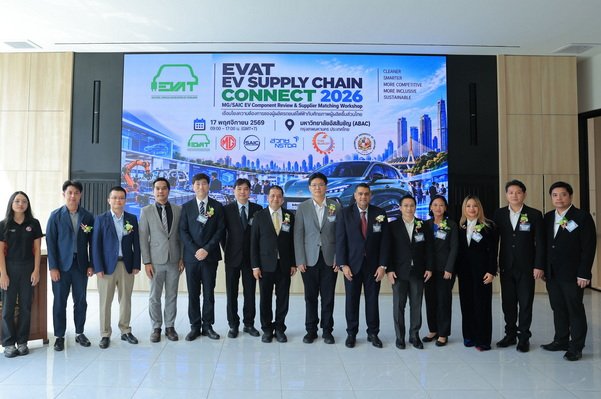
สมาคมยานยนต์ไฟฟ้าไทย (EVAT) เดินหน้ายกระดับอุตสาหกรรมยานยนต์ไทย จัดงานสัมมนาและเชิงปฏิบัติการ EVAT EV Supply Chain Connect 2026: MG/SAIC EV Component Review & Supplier Matching Workshop ณ มหาวิทยาลัยอัสสัมชัญ วิทยาเขตสุวรรณภูมิ โดยเป็นการผนึกกำลังครั้งสำคัญระหว่าง EVAT, สำนักงานคณะกรรมการส่งเสริมการลงทุน (BOI), บริษัท เอสเอไอซี มอเตอร์-ซีพี จำกัด (MG), สำนักงานพัฒนาวิทยาศาสตร์และเทคโนโลยีแห่งชาติ (สวทช.), สมาคมส่งเสริมการรับช่วงการผลิตไทย (Thai Subcon) และมหาวิทยาลัยอัสสัมชัญ (ABAC) เพื่อเชื่อมโยงความต้องการใช้ชิ้นส่วนของผู้ผลิตรถยนต์ไฟฟ้ากับศักยภาพของผู้ผลิตชิ้นส่วนไทย
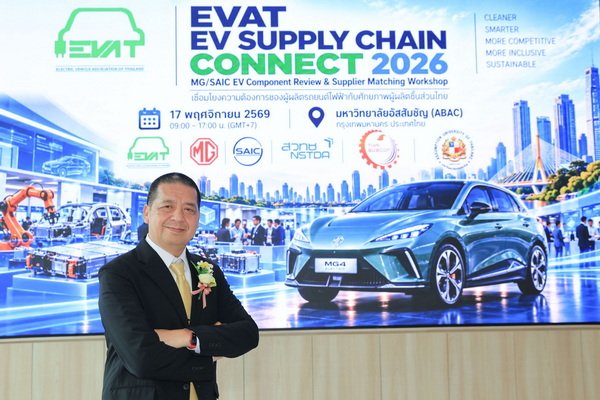
นายสุโรจน์ แสงสนิท นายกสมาคมยานยนต์ไฟฟ้าไทย และรองประธานกรรมการบริหาร บริษัท เอสเอไอซี มอเตอร์–ซีพี จํากัด บรรยายพิเศษในหัวข้อ “ก้าวสำคัญของอุตสาหกรรม EV ไทย” โดยเน้นย้ำถึงแนวทางการทำงานว่า “การจับคู่ธุรกิจในอุตสาหกรรม EV ที่ผ่านมามักไม่เกิดผลลัพธ์ที่ชัดเจน เพราะเป็นการนำฝ่ายจัดซื้อมาพบฝ่ายขายเพื่อซื้อของที่มีพร้อมขายอยู่แล้วบนชั้นวาง (Ready on shelf) แต่สำหรับอุตสาหกรรม EV ไทยที่กำลังเริ่มต้น สิ่งที่เราต้องการคือ ‘การพัฒนาผลิตภัณฑ์ใหม่’ วันนี้เราจึงจัดกลุ่มชิ้นส่วน เช่น กลุ่มแบตเตอรี่ และชิ้นส่วนไฟฟ้า แล้วนำวิศวกรของ MG มานั่งคุยกับวิศวกรของผู้ผลิตชิ้นส่วนไทยโดยตรง หากมีช่องว่างทางเทคโนโลยี เรามี สวทช. และ BOI เข้ามาช่วยอุดรอยรั่วด้วยงานวิจัยและสิทธิประโยชน์ เพื่อให้คนไทยเข้าสู่ห่วงโซ่อุปทานนี้ได้จริง”
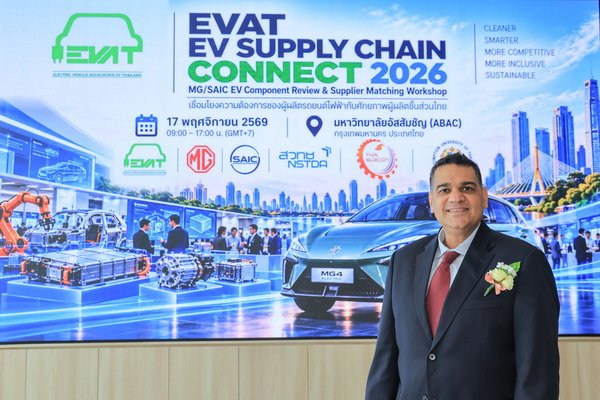
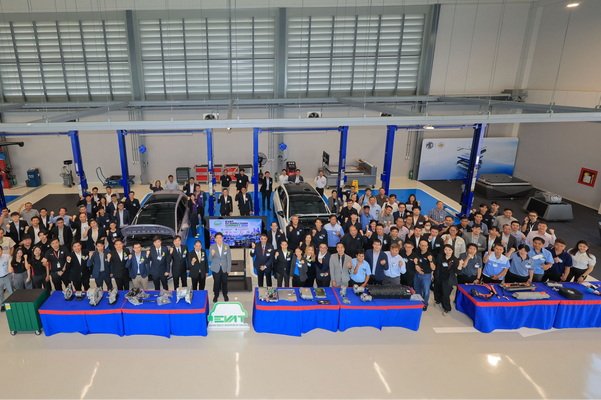
นายสุทีป รัตนภาส อุปนายกสมาคมยานยนต์ไฟฟ้าไทย ฝ่ายส่งเสริมการผลิตชิ้นส่วนและอุตสาหกรรมเกี่ยวเนื่อง ผู้ริเริ่มแนวคิดการจัดงาน กล่าวเปิดงานว่า “กิจกรรม EV Teardown Workshop ในวันนี้ ถือเป็นก้าวประวัติศาสตร์ที่เราได้นำชิ้นส่วนรถยนต์ไฟฟ้าของ MG ถึง 3 รุ่น ได้แก่ MG4, MG S5 และ MG Urban มาเปิดโครงสร้างให้บริษัทผู้ผลิตชิ้นส่วนชั้นนำของไทยกว่า 43 บริษัท ได้สัมผัสและเจาะลึกรายละเอียดเชิงวิศวกรรม ร่วมกับฝ่ายพัฒนาชิ้นส่วนของ MG/SAIC Motor-CP เพื่อค้นหาโอกาสในการเพิ่มการใช้ชิ้นส่วนที่ผลิตในประเทศไทย (Local Content)
การเพิ่ม Local Content ไม่ใช่เพียงการตั้งเป้าหมายว่าจะใช้ชิ้นส่วนในประเทศมากขึ้น แต่ต้องเริ่มจากการเข้าใจว่าผู้ผลิตรถยนต์ต้องการอะไร และช่วยให้ผู้ผลิตชิ้นส่วนไทยพัฒนาความสามารถเพื่อตอบโจทย์นั้นได้อย่างไร เป้าหมายของเราคือการเปลี่ยนความเข้าใจด้านเทคนิคให้กลายเป็นโอกาสทางธุรกิจที่เกิดขึ้นได้จริง”
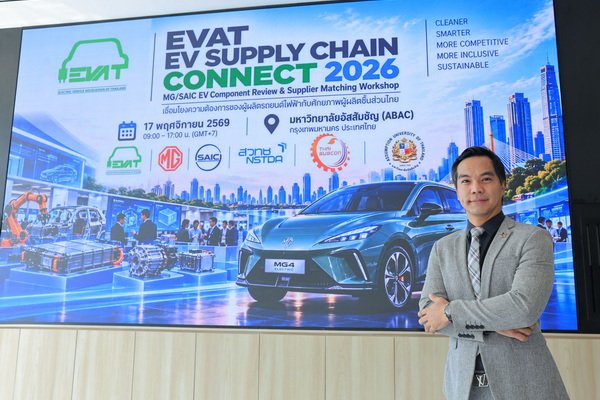
ขณะที่ นายสยามณัฐ พนัสสรณ์ อุปนายกสมาคมยานยนต์ไฟฟ้าไทย ฝ่ายส่งเสริมการผลิตยานยนต์ กล่าวว่า “การจะปกป้องอุตสาหกรรมยานยนต์ไทยให้มีลมหายใจต่อไปได้ในยุคเปลี่ยนผ่าน ต้องอาศัยความร่วมมือและยุทธศาสตร์ที่ชัดเจน ความสำเร็จประการแรกของเราคือการรวมพลัง 10 สมาคมอุตสาหกรรมสัญชาติไทย ผลักดันให้ภาครัฐปรับโครงสร้างภาษีสรรพสามิตรถยนต์ไฟฟ้านำเข้า (CBU) เป็น 35% ได้สำเร็จ ซึ่งนั่นเป็นเพียง ‘บันไดขั้นแรก’ เพื่อห้ามเลือด แต่ภารกิจสำคัญหลังจากนี้คือ การเสริมสร้างศักยภาพผู้ประกอบการไทย (Capacity Building) เพื่อให้พร้อมแข่งขันและแทรกตัวเข้าสู่ Supply Chain ของ EV ได้อย่างเป็นรูปธรรม งานในวันนี้คือหนึ่งในกลไกสำคัญที่เราตั้งใจจัดขึ้น เพื่อเปิดโอกาสให้ผู้ผลิตไทย เช่น ผู้ที่เคยผลิตฮีตซิงก์ระบายความร้อนให้เครื่องใช้ไฟฟ้า ได้มาเห็นชิ้นส่วน MG ของจริงและนำกลับไปต่อยอดพัฒนาเป็นฮีตซิงก์สำหรับระบายความร้อนแบตเตอรี่รถ EV เพื่อสร้างการใช้ชิ้นส่วนในประเทศ เป็น Local Content ของคนไทยอย่างแท้จริง” นายพลพัฒน์ นภาวรานนท์ ผู้อำนวยการ กองพัฒนาผู้ประกอบการไทย สำนักงานคณะกรรมการส่งเสริมการลงทุน
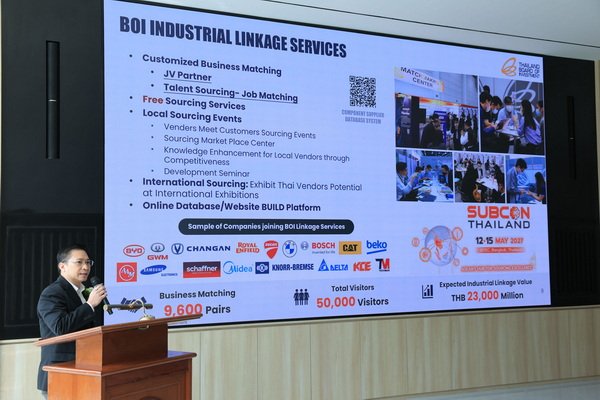
ทั้งนี้ ภายในงานยังได้รับการสนับสนุนจาก นายพลพัฒน์ นภาวรานนท์ ผู้อำนวยการ กองพัฒนาผู้ประกอบการไทย สำนักงานคณะกรรมการส่งเสริมการลงทุน และถ่ายทอดองค์ความรู้ด้านการวิจัยพัฒนาจาก ดร.ชินะ เพ็ญชาติ ผู้แทนผู้อำนวยการ สวทช. และ นายพงศ์ภัทร ทองมาก ที่ปรึกษาอาวุโส ITAP พร้อมด้วย และทีมวิศวกรรมจาก SAIC-CP นำโดย นายกิตติคุณ คำเวียงสา รองผู้อำนวยการแผนกวิศวกรรมผลิตภัณฑ์ ที่มาร่วมเจาะลึกความต้องการจัดซื้อและเกณฑ์การคัดเลือกผู้ผลิตชิ้นส่วนไทย
ประโยชน์ที่ภาคอุตสาหกรรมไทยได้รับจากการจัดงานในครั้งนี้ ประกอบด้วย:
– เพิ่มสัดส่วนการใช้ชิ้นส่วนในประเทศ (Local Content): ช่วยให้ผู้ผลิตไทยเข้าใจสเปกของค่ายรถยนต์โดยตรง นำไปสู่การผลิตป้อนเข้าสู่สายการผลิตในประเทศ ลดการพึ่งพาการนำเข้า
– ยกระดับขีดความสามารถทางเทคโนโลยีและวิศวกรรม: เรียนรู้โครงสร้าง EV สมัยใหม่จากของจริง พร้อมรับการถ่ายทอดองค์ความรู้จากค่ายรถและหน่วยงานวิจัย ช่วยเร่งการปรับตัวจากชิ้นส่วนสันดาป (ICE) สู่ EV ได้อย่างแม่นยำ
– สร้างเครือข่ายธุรกิจและโอกาสทางการค้าใหม่: เปิดพื้นที่เจรจาจับคู่ธุรกิจ (Business Matching) โดยตรงระหว่าง 43 บริษัทผู้ผลิตชิ้นส่วนไทยและผู้ผลิตรถยนต์
– เสริมความแข็งแกร่งสู่การเป็นศูนย์กลางการผลิต (EV Hub): การสร้างห่วงโซ่อุปทานที่ครบวงจรจะช่วยดึงดูดการลงทุน และผลักดันไทยสู่การเป็นศูนย์กลางการผลิต EV และชิ้นส่วนชั้นนำของภูมิภาคอย่างยั่งยืน
EVAT Joins Forces with BOI, NSTDA, MG, Thai Subcon and ABAC to Organize “EV Teardown Workshop,” Bringing Together 43 Thai Auto Parts Manufacturers to Advance Domestic Component Production Opportunities
The Electric Vehicle Association of Thailand (EVAT) continues its efforts to strengthen Thailand’s automotive industry by organizing the “EVAT EV Supply Chain Connect 2026: MG/SAIC EV Component Review & Supplier Matching Workshop” at Assumption University, Suvarnabhumi Campus.
The event marks a significant collaboration among EVAT, the Thailand Board of Investment (BOI), SAIC Motor-CP Co., Ltd. (MG), the National Science and Technology Development Agency (NSTDA), the Thai Subcontracting Promotion Association (Thai Subcon), and Assumption University (ABAC). The initiative aims to connect the component requirements of electric vehicle manufacturers with the capabilities of Thai auto parts suppliers.
Mr. Suroj Sangsnit, President of the Electric Vehicle Association of Thailand and Executive Vice President of SAIC Motor-CP Co., Ltd., delivered a keynote address titled “A Significant Step Forward for Thailand’s EV Industry,” emphasizing the approach behind the initiative:
“Business matching activities in the EV industry have often failed to produce tangible results because they typically bring purchasing departments together with sales teams to procure products that are already available on the shelf (ready on shelf). However, for Thailand’s emerging EV industry, what we truly need is ‘new product development.’
Today, we have therefore organized components into categories, such as batteries and electrical components, and brought MG engineers together with engineers from Thai component manufacturers for direct discussions. Where technological gaps exist, NSTDA and BOI will help bridge them through research and investment incentives, enabling Thai manufacturers to genuinely become part of this supply chain.”
Mr. Sutheep Ratanabhas, Vice President of Parts Manufacturing & Related Industries Promotion
Electric Vehicle Association of Thailand (EVAT), who initiated the concept for the event, stated in his opening remarks: “Today’s EV Teardown Workshop represents a historic milestone. We have brought components from three MG electric vehicle models—MG4, MG S5, and MG Urban—for structural examination, allowing more than 43 leading Thai auto parts manufacturers to examine and explore their engineering details firsthand alongside the component development team from MG/SAIC Motor-CP. The objective is to identify opportunities to increase the use of locally manufactured components (Local Content).
Increasing Local Content is not simply about setting targets to use more domestically produced parts. It must begin with understanding what automakers require and determining how Thai component manufacturers can develop the capabilities needed to meet those requirements.Our goal is to transform technical understanding into tangible business opportunities.”
Meanwhile, Mr. Siamnat Panassorn, Vice President for Automotive Manufacturing of EVAT, stated: “Protecting Thailand’s automotive industry and ensuring its continued survival during this period of transition requires cooperation and a clear strategy.
Our first achievement was bringing together 10 Thai industrial associations to successfully advocate for the government to restructure the excise tax on imported completely built-up (CBU) electric vehicles to 35%.
However, this is only the ‘first step’ toward stopping the bleeding. The more important mission from this point forward is to strengthen the capabilities of Thai entrepreneurs (Capacity Building), enabling them to compete effectively and establish a tangible presence within the EV supply chain.
Today’s event is one of the key mechanisms we have deliberately established to create opportunities for Thai manufacturers. For example, companies that previously produced heat sinks for electrical appliances can now examine actual MG components and use that knowledge to further develop heat sinks for EV battery cooling applications.
This will help increase the use of domestically manufactured components and create genuine Thai Local Content.”
Event Highlights at the Seminar and Workshop “EVAT EV Supply Chain Connect 2026: MG/SAIC EV Component Review & Supplier Matching Workshop”
The event also received support from Mr. Polapat Naphavaranonth, Director, Thai Enterprise Development Division of The Board of Investment of Thailand (BOI)
Research and development knowledge was shared by Dr. Chi-na Benyajati, Representative of the Director of NSTDA, and Mr. Pongpatt Tongmak, Senior Advisor, ITAP.
In addition, the engineering team from SAIC Motor-CP, led by Mr. Kittikhun Khomwaingsa, Deputy Director – Product Engineering of SAIC Motor-CP Co., Ltd., participated in in-depth discussions on procurement requirements and the criteria for selecting Thai component suppliers.
Event Highlights at the Seminar and Workshop “EVAT EV Supply Chain Connect 2026: MG/SAIC EV Component Review & Supplier Matching Workshop”
Key Benefits to Thailand’s Industrial Sector
The event delivers several important benefits to Thailand’s industrial sector:
1. Increasing the Proportion of Locally Manufactured Components (Local Content)
The initiative enables Thai manufacturers to gain a direct understanding of automakers’ component specifications, creating opportunities to manufacture and supply parts to domestic production lines while reducing dependence on imports.
2. Enhancing Technological and Engineering Capabilities
Participants gain firsthand knowledge of modern EV structures through actual components, together with knowledge transfer from automakers and research institutions. This will help accelerate the transition from internal combustion engine (ICE) components to EV components with greater precision.
3. Building Business Networks and Creating New Commercial Opportunities
The workshop provides a platform for direct business matching and negotiations between 43 Thai component manufacturers and automotive manufacturers.
4. Strengthening Thailand’s Position as an EV Manufacturing Hub
Developing a comprehensive supply chain will help attract investment and sustainably position Thailand as a leading regional hub for EV and EV component manufacturing.

